Sorting through financial paperwork can feel overwhelming, especially when years of tax returns and other documents pile up with no clear system. Many people hold on to far more than necessary simply because discarding something important seems risky. Yet keeping everything only adds to the chaos. With a bit of consistency, the task becomes manageable, and knowing the recommended timelines for retaining key records can make the process far easier. Understanding what truly matters helps bring order to an otherwise cluttered collection.
File These Forever
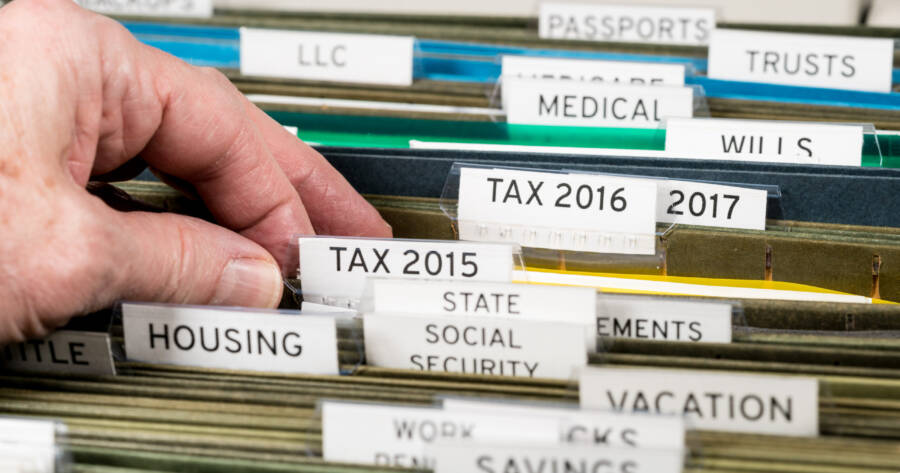
There are some documents that you don’t want to ever get rid of. This paperwork needs to stay filed somewhere extremely safe. While a safe-deposit box is a good idea, buying a fire-proof safe might be an easier answer. Birth and death certificates, marriage licenses, divorce decrees, Social Security cards, and military discharge paperwork are all examples of things to keep indefinitely. Might as well throw your passports in your safe too. Here are the other documents you want to keep filed someplace safe.
Estate Planning Documents
Put copies of any wills, trusts, and powers of attorney in a safe deposit box or safe. You should also make sure that there are also copies available at your attorney’s office. This should go without saying, but also make sure someone else can get access the documents if you pass unexpectedly.
Life Insurance Policies
I can tell you from personal experience that it’s not an easy to try and hunt down financial information right after a loved one has passed away. You’re already grieving, but now you’re also stressed about finding the right life insurance information to keep the family going financially. You should keep any permanent life insurance policies in your permanent filing system. Term life insurance documents can be shredded once the term has expired, though.
Retirement Information
Since this is a part of your investment portfolio, you may not think about it once you’ve set your savings in motion. However, make sure you keep the documents easily accessible in your records. This is something you’ll want to get your hands on easily.
Digital Copies
For these “keep forever” documents, we recommend that you take the time to scan them. Turn them into PDF files and put them someplace safe on your hard drive. Then back them up to a USB stick or a cloud storage site, just to be safe. Now you won’t have to worry about losing the physical documents. Plus you’ll have easy access to any information you might need. For example, I needed some family trust documents when I opened a financial account recently. It was much easier to email the digital copies than to photocopy the original and then make an appointment to drop it off in person.
It’s also helpful to have electronic copies of life insurance policies and retirement accounts. Your heirs will be able to pull up the information with just a few clicks. When I helped my mom file for my dad’s life insurance claim recently, I spent half an hour just looking for the paperwork. All that just to find the phone number for the insurance call center. I had completely forgotten I put all the information in a drawer in my office.
If I had everything on my computer, then I could’ve just pulled it up (or use the search button) to locate the information I needed in mere minutes.
Keep Your Old Tax Returns For Seven Years
I used to think that the warning to keep your tax records for seven years was an urban myth. However, it’s actually very important advice. There’s a good reason for it, too. The IRS can decide to randomly audit anyone for up to three years after they file their tax return. On top of that, they can audit you up to six years if they discover you failed to report up to 25% of your gross income. So even your tax returns are totally on the level (we hope they are!), you should keep your tax returns for at least seven years. After that, any mistakes or errors that the IRS missed are too old to audit. Make sure you hold on to both your state and federal returns (and any supporting documents) for secon years.
Keep Until Paid Off, Sold, or Past Warranty
Loan documents, vehicle records, and household appliance paperwork should all be held onto for the period of time. That timeframe can vary depending on a few things. For example, keep all documents for anything you are still paying for. It could be a loan, a car, or an appliance you financed. Even if you bought your new car or fridge with straight case, make sure you keep all documents as long as the item is sill under warranty.
Your credit card may also extend the warranty of your purchases for an additional year. Check the fine print of your credit card agreement. If that applies to you, and you bought the item with your car, keep the paperwork for an extra year just in case it suddenly breaks down.
Keep for a Year or Less
Some documents you won’t need for long at all. Unless you actually enjoy that stack of documents building up over the years, go ahead and toss these things once a year or so.
Pay Stubs
As the world becomes more digital, finding space for these in your filing cabinet is getting easier. However, it’s a good idea to hold onto these until you’ve had a chance to reconcile them with your W-2s. You can probably ask to have your pay stubs emailed to you. That makes it much easier to keep a copy for your records.
Renewable Insurance Policies
Each time that you renew your car or homeowner’s insurance, save the new information. It’s safe to toss last year’s paperwork. All the relevant information is included again on the new stuff.
Bank Records
Keep these so that you can prove any deductions during tax time. Then file them along with your tax information for seven years afterward. Any other monthly statements can be shredded after a year, as long as they are not needed for your taxes. Again, most banks now offer online statements. Consider going paperless, knowing that you can just log into your banking account and find any information you might need.
Investment Statements
You don’t necessarily need to hold onto monthly or quarterly account statements for your investments. However, you do want to hold onto your annual statements as long as the accounts are open. This is another situation when it might be easier to have your statements in PDF form. Toss those quarterly reports after you’ve read them.
Receipts
You only need to hold onto these if you need them for tax purposes, potential refunds/returns, or if you need proof of purchase for warranties. So go ahead and save receipts for big or important purchases for a while. At least until the warranty expires. Otherwise, they can be tossed or shredded pretty much immediately.
The Bottom Line
Getting your financial paperwork organized will make tax time (and other financial decisions) easier to manage. You’ll thank yourself for tackling that mountain of documents the next time you need to go digging for something and you know exactly where to find it.
Most of us seem to be hoarders when it comes to financial documents. There’s that nagging worry that we will accidently throw out something important right before we suddenly need it. Hopefully this article will help you understand what documents you need to keep forever, which can be tossed eventually, and which ones you don’t need to save at all.